
Everyone at COP30 agrees those who pollute must pay. But how much? And above all,
how should we use this money? Citizens and governments hold different positions.
Whether you step into the negotiation rooms or attend the side events, the discussion
revolves around “the polluter pays” principle and everything that comes with it—namely,
the development of a carbon emissions market, which could give rise to a new economy.
The prospects are interesting. According to Equal Right, the proceeds raised by carbon
pricing would generate between $5 trillion and $20 trillion dollars every year until the
2070s. And indeed, about 55 national jurisdictions already price carbon either through a tax or
ETS. This number is expected to grow after this COP, as a series of agreements between
countries is anticipated to promote the globalization of the emissions market. However,
many questions remain unanswered: who sets the price of CO₂? To what extent are
polluters truly required to pay for their emissions? And above all: where does the money
go, and how is it used?
Civil society is very much aligned: establishing a minimum price for CO₂, redistributing
revenues to people to reduce poverty, and supporting the conservation of natural
resources.
But politics is cautious; key players did not even attend, and expectations for major
decisions are low. For this reason, people have been the true protagonists of this COP.
NGOs, youth movements, associations, and local groups—unlike governments—are
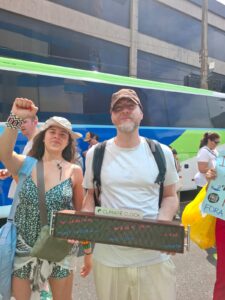
aware that citizens share a common goal. With EUMANS, the pan-European movement of
citizens for democracy and sustainability, we arrived in Belém thanks to our collaboration
with Equal Right, with the aim of advancing our campaign on the reform of the European
ETS and a Global Carbon Pricing Agreement. In just a few days, we realized that dozens
of organizations, experts, and scientists support and promote the same proposal.
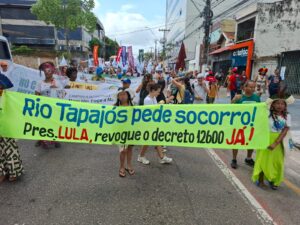
For this reason, we dedicated each day of the COP to organize events ( Conservation and Restoration of Ecosystems: Actions for the Rights of Nature on November 17; Carbon Pricing and Waste Management: Balancing Climate Goals with Social Equity on November 20 ), but also to meeting NGOs, members of parliament, and ministries from all countries—from Iceland to
Fiji, from Germany to Brazil—in order to build the widest possible network to develop a shared proposal for a global carbon pricing agreement ensuring true climate and social justice.
Thanks to open minded policy makers, and to the engagement of NGOs, EUMANS is
organizing an international working group, which aim to prepare a common, high level
proposal for a global carbon pricing in 2026.