


Eumans monitorUpdated on 11 October 2026, 09:55Italiano
US sanctions against the International Criminal Court
On 9 October 2026 the United States sanctioned the Court as an institution: no longer individual judges, but the whole Court. Here you can see who is defending it, who is staying silent and who can protect it in Europe, with a source for every position.
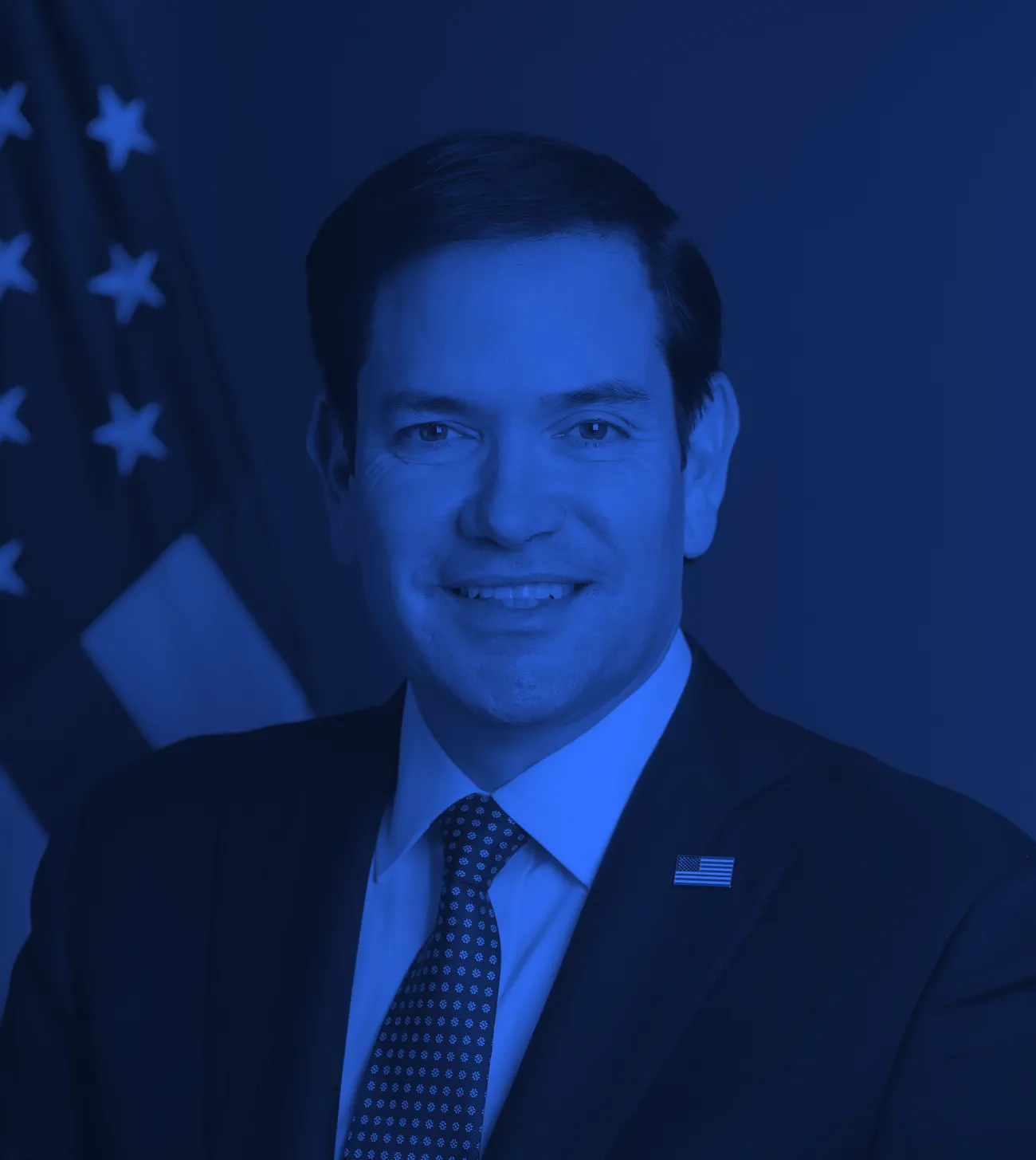
“Either the ICC will end its threats, or we will end the ICC”
- 125States Parties to the Rome Statute, which created the Court
- 13judges and prosecutors already sanctioned before the whole Court
- 92MEPs call for the Blocking Statute to be activated
- 5 of 27EU governments call for it. None has come out against it
- 177days to 7 April 2027, when the licence that lets the Court operate expires
In brief
What you need to know, as of 11 October 2026, 09:55.
- 01
The decision
On 9 October 2026 US Secretary of State Marco Rubio announced sanctions against the ICC as an institution: it is the first time Washington has targeted the Court as a whole, no longer just individual judges and prosecutors.
- 02
Legal basis
Executive Order 14203 (February 2025). The ICC has been added to OFAC’s SDN list: its assets in the US are blocked and providing it with funds, goods or services is prohibited.
- 03
Licences and timing
OFAC general licences (GL 13-16): GL 13, which lets the Court continue its ordinary activities, expires on 7 April 2027, in about six months. The other three (telecoms and software, pensions, detainees) have no expiry date. According to Rubio, the measures leave States Parties room to negotiate a solution, and many governments see these six months as a window for dialogue.
Read the other 6 pointsClose
- 04
Reactions
Condemnation from the UN (Guterres), the ICC, the European Commission, Belgium, Spain and Germany; a joint statement by the foreign ministries of 8 countries (including Italy, France, Germany, the United Kingdom, Japan and Canada). Israel (Netanyahu) welcomes the move.
- 05
European Commission
The Commission calls the sanctions “deeply regrettable” but has not yet activated the Blocking Statute (Regulation 2271/96).
- 06
Blocking Statute
The governments of Belgium, Spain, Slovenia, France (in favour since 2 June 2026) and Austria (Chancellor Stocker on 9 October) explicitly call for it; the Netherlands asks for it to be prepared as a last resort. It is also demanded by S&D, the Greens, the Left, 92 sitting MEPs, Eumans and NPWJ, UN experts, HRW, Amnesty, the Coalition for the ICC and the ICC itself. No explicit position from the Italian government; Germany mentions it without committing; no State has come out against it.
- 07
EU leaders
Costa promises “adequate measures” to be studied by the 27 within the six months; on 10 October Kallas, on behalf of the EU, asks the US to reverse the measures. Neither mentions the Blocking Statute. On Monday 12 October the Foreign Affairs Council meets in Luxembourg: the ICC is not on the published agenda, but Belgian minister Prévot announced he will raise the request to activate the Blocking Statute.
- 08
European Parliament
In plenary, Parliament called for the Blocking Statute to be activated three times in 2025 (2 April, 9 July, 11 September). On 9 October 2026 the chairs of the AFET, DROI, INTA and JURI committees and of the US delegation asked the Commission to activate it “immediately”. 92 sitting MEPs have asked for it personally (29 S&D, 26 Left, 23 Greens, 8 Renew, 4 EPP, 2 non-attached). As a group line it is backed by S&D, the Greens and the Left: 233 seats out of 719, short of the 360 majority. No position from ECR, Patriots or ESN.
- 09
Italy
On 10 October Foreign Minister Tajani opposed the sanctions “firmly”, but the government has said nothing on the Blocking Statute.
What the United States decided
- Announcement
- 9 October 2026: video by Marco Rubio on social media and State Department statement (“Imposing Sanctions on the International Criminal Court”)
- Target
- The International Criminal Court as an institution. This adds to the designations of 13 judges and prosecutors (ICC figure)
- Effects
- Blocking of ICC property and interests in the US or held by US persons; ban on providing funds, goods or services to the Court, with a risk of sanctions for companies that serve it
- Licences / timing
- 4 OFAC general licences of 9 October (texts checked on the US Treasury website). GL 13, covering the Court’s ordinary activities including States Parties’ contributions, expires on 7 April 2027 at 00:01 (New York time). GL 14 (telecoms, software, cloud), 15 (pensions) and 16 (nine detainees) have no expiry date
Legal basis, motives and precedentsClose
- Legal basis
- Executive Order 14203 (6 February 2025), sec. 1(a)(ii)(A); listing on OFAC’s SDN list (US Treasury)
- US motive
- The Afghanistan investigation (US personnel) and the arrest warrants for Netanyahu and Gallant; the US does not recognise ICC jurisdiction over its own nationals
- Context
- The announcement came a few hours after the Nobel Peace Prize was awarded to former ICC judge Navi Pillay. Assembly of States Parties in December 2026
- Precedents
- Feb. 2025: Prosecutor Karim Khan. Jun. 2025: 4 judges. Aug. 2025: judges Guillou and Prost and 2 deputy prosecutors. Aug. 2026: President Tomoko Akane and Abdoulaye Seye
The US Treasury licences
On 9 October OFAC issued four general licences. When GL 13 expires, anyone subject to US law will have to wind down their dealings with the Court, unless it is extended.
licence GL 13 expires7 April 2027, 00:01 New York time
- GL 13
Operations and wind-down
Transactions ordinarily incident and necessary to maintaining or winding down the ICC’s activities, contracts and agreements: including States Parties’ contributions, salaries, staff health insurance and medical services, rent, utilities, taxes and standard commercial services. The ICC’s blocked accounts may be used for these transactions. It does not cover other sanctioned persons.
Expires on 7 April 2027
- GL 14
Telecoms and business software
Telecommunications and internet services (email, video conferencing, collaboration platforms, hosting, domains) and business software: financial management, payroll, cybersecurity, data storage and backup, cloud services and Software-as-a-Service.
No expiry date in the text
- GL 15
Pensions
Transactions needed to pay ICC-related pensions; payments to sanctioned persons go into blocked interest-bearing accounts in the United States.
No expiry date in the text
- GL 16
Detainees
Transactions needed for the detention, health and safety of the nine detainees listed in the annex (Duterte, El Hishri, Said Abdel Kani, Al Hassan, Ngaïssona, Ntaganda, Ongwen, Ali Kushayb, Yekatom) and for running the detention facilities.
No expiry date in the text
Effects outside the United States
The designation bars US persons (citizens, residents, companies and their controlled foreign subsidiaries) from any transaction with the ICC, except under the licences. For non-US persons the risk comes in two ways: the possibility, provided for in executive orders of this kind, of designating anyone who gives material, financial or technological support to a sanctioned party; and over-compliance, with European banks and suppliers cutting off services out of caution even when not required to. That is exactly what the Blocking Statute would prohibit in the EU.
Blocking Statute: who is calling for it
What it is
Regulation (EC) 2271/96 (the Blocking Statute) forbids EU operators from complying with the extraterritorial sanctions listed in its annex and allows them to claim damages. To protect the ICC, Executive Order 14203 would have to be added to the annex. Sources differ on the procedure: according to Euronews a Commission delegated act is enough, without a positive vote by the Council and Parliament; in 2025 a Commission spokesperson instead spoke of a qualified majority of Member States. The instrument has so far been used against US sanctions on Cuba and Iran. Commentators point out that it does little to protect companies heavily exposed to the US market and the dollar.
- 20Calls for activation
- 1Asks to prepare it
- 3Mentions it, no commitment
- 1No explicit position
Governments 8
BelgiumCalls for activation
Maxime Prévot, Foreign Minister
On X he calls for the Blocking Statute to be activated to protect the Court and those who support its work. He will raise the issue at Monday’s Foreign Affairs Council and at the next European Council. Belgium has been asking for it since 6 June 2025, together with Slovenia (Belga).
ANSASpainCalls for activation
Pedro Sánchez, Prime Minister
Letter to von der Leyen calling for immediate activation, with the US executive orders added to the annex, to neutralise in the EU the sanctions against ICC judges and prosecutors and against Francesca Albanese. On 9 October Madrid deplored the new sanctions.
La MoncloaSloveniaCalls for activation
Government / Foreign Ministry
Joins the Spanish request. As early as June 2025, after the sanctions on Slovenian judge Beti Hohler, it had announced a proposal for immediate activation. No new statement found on 9 October.
EunewsNetherlandsAsks to prepare it
Tom Berendsen, Foreign Minister
Asked the Commission to prepare the statute so that it can be used quickly, calling it a “nuclear option” to be used if Washington steps up the pressure. On 9 October he stressed dialogue in the six months before the measures take effect.
AnadoluAustriaCalls for activation
Christian Stocker, Chancellor; Beate Meinl-Reisinger, Foreign Minister
In the EU Affairs Committee of the Austrian Parliament, Chancellor Stocker spoke out against the sanctions and backed activating the “Blocking Statute” (Parlamentskorrespondenz, 9 October, 20:24). Minister Meinl-Reisinger condemns the sanctions and also sees them as an attack on Austria’s sovereignty (ORF).
Parlamentskorrespondenz (APA-OTS)GermanyMentions it, no commitment
Johann Wadephul, Foreign Minister
In The Hague he assured that Germany will help the ICC stay operational. According to Democrata he mentioned the Blocking Statute among the tools, but there is no explicit call for activation (beck-aktuell does not mention it).
DemocrataFranceCalls for activation
Government (Ministry for Europe and Foreign Affairs)
Answering a question in the National Assembly, the government says it is “in favour of activating the EU blocking regulation”, as a sign of support for the Court and the sanctioned judges, and that it is working on it with the Commission and the Member States. No new statements on the instrument since 9 October.
Assemblée nationale (risposta del governo)ItalyNo explicit position
Government / Farnesina (Foreign Ministry)
Signs the joint statement against the sanctions and focuses on dialogue with non-party States. On 10 October Tajani “firmly” opposes the sanctions but does not mention the Blocking Statute. No explicit position on the instrument.
ANSAEU institutions 2
European CommissionMentions it, no commitment
Commission; Commissioner Maria Luís Albuquerque; spokesperson Anouar El Anouni
It is the institution with the power to activate it. In its written answer of 13 May 2026 to question E-000718/2026 it states that amending the annex “is among the legal measures being assessed”, but that “at this stage” diplomacy and dialogue remain the most effective path. On 9 October it promises “all necessary measures” without activating it.
Parlamento europeo (risposta della Commissione)European CouncilMentions it, no commitment
António Costa, President
Promises “adequate measures” if needed, to be studied by the 27 within the six months, but avoids saying whether the EU will activate the Blocking Statute.
EFE (Infobae)European Parliament and parties 7
European Parliament: S&D groupCalls for activation
Socialists and Democrats; group president Iratxe García Pérez
Calls on the Commission to activate the Blocking Statute to protect ICC judges. García Pérez renewed the appeal to von der Leyen in August.
EunewsDanilo Della Valle (M5S)Calls for activation
MEP, The Left
Calls on the EU to respond by activating the Blocking Statute straight away and accuses the EU of having been too compliant.
ANSAElly Schlein (PD)Calls for activation
Leader of the Italian Democratic Party
Calls the sanctions unacceptable and asks the Commission to step in by activating the Blocking Statute (statement of 9 October, LaPresse video).
Agenzia NovaCecilia StradaCalls for activation
Independent MEP elected with the Italian Democratic Party
At the Eumans and NPWJ demonstration she called it “shameful” that the Commission had still not activated the Blocking Statute.
EunewsEuropean Parliament (plenary)Calls for activation
Resolutions adopted in plenary
Annual human rights report of 2 April 2025 (para. 30) and resolution of 9 July 2025 on the war in Ukraine (para. 8): “calls on the Commission to urgently activate the Blocking Statute”. Resolution of 11 September 2025 on Gaza (para. 16): “Urges the Commission to activate the blocking statute to protect European operators”. Texts checked on the Parliament’s website.
Parlamento europeo (TA-10-2025-0199)European Parliament committee chairsCalls for activation
McAllister (AFET, EPP), Satouri (DROI, Greens), Lange (INTA, S&D), Kyuchyuk (JURI, Renew), Benifei (US delegation, S&D)
Joint statement published by the European Parliament: striking the Court as an institution “crosses a fundamental red line”; “The European Commission must immediately trigger the EU Blocking Statute”.
Parlamento europeo (comunicato 20261009IPR48086)Volt EuropaCalls for activation
Pan-European party
Calls on the Commission and the Council to add EO 14203 to the annex of the Blocking Statute immediately, which according to Volt can be amended without a veto by individual States (art. 1.2). It recalls that in February 2026 the Commission said the amendment was “under consideration”.
Volt EuropaICC, UN and civil society 8
International Criminal CourtCalls for activation
President Tomoko Akane; Judge Nicolas Guillou
Akane asked the EU to activate the Blocking Statute (date of the appeal to be confirmed). The sanctioned French judge Guillou asked for it in February 2026. On 9 October the Court asked States for “concrete measures” and, according to EFE, for the Blocking Statute.
ANSA (Guillou)UN human rights expertsCalls for activation
Special Rapporteurs of the Human Rights Council
After the sanctions on President Akane they asked the EU to activate the Blocking Statute.
OHCHRHuman Rights WatchCalls for activation
Philippe Bolopion, Executive Director
Calls on the EU to use its own legislation to neutralise the sanctions (Reuters does not name the instrument, but HRW has been calling for the Blocking Statute since 2025).
Reuters (via Yahoo)Coalition for the ICCCalls for activation
Coalition of more than 2,500 NGOs
Calls on the Commission to activate the EU Blocking Statute immediately, and on States to adopt equivalent national laws, so that European suppliers do not apply the sanctions outside the US.
CICCAmnesty InternationalCalls for activation
Erika Guevara Rosas
Calls on States to adopt national and regional blocking statutes so that the ICC keeps access to essential services; does not explicitly name the EU.
Amnesty InternationalEumans and No Peace Without JusticeCalls for activation
Marco Cappato (Eumans); NPWJ
Demonstration outside the Berlaymont: they call on the Commission to activate the Blocking Statute as the first of three demands. Cappato announces a relay hunger strike addressed to von der Leyen: “There are no more excuses, it is a matter of political will.”
EunewsUnion of European Federalists (UEF)Calls for activation
Domènec Ruiz Devesa, President
On International Criminal Justice Day it calls for the immediate activation of the Blocking Statute, recalling that the Commission has not followed up on the European Parliament’s calls.
UEFDeutscher Anwaltverein (DAV)Calls for activation
German Bar Association; with the European CCBE
Calls for the US executive order sanctioning the ICC to be added to the annex of Regulation 2271/96 and for the EU anti-coercion instrument to be considered. The CCBE warns that companies may cut legitimate ties with the Court out of caution.
beck-aktuellEuropean Parliament: 92 MEPs call for it
The European Parliament does not decide on the Blocking Statute: amending the annex is up to the Commission. But it carries political weight. In plenary it called for it three times in 2025 (2 April, 9 July, 11 September), and on 9 October 2026 the chairs of the AFET, DROI, INTA and JURI committees and of the delegation for relations with the United States asked for it to be activated “immediately”. Each dot is a seat: in green, the MEPs who asked for it personally, through a parliamentary question or a public statement.
- MEP who asked for it (question or statement)
- Other members of groups with a supporting line
- No position found
- Majority threshold (360 of 719 sitting MEPs)
233 seats in groups calling for the statute (S&D, Greens, Left). A majority needs 360.
The 9 political groups, one by one
- LeftThe Left26 of 45
The group calls for activation
The group calls for the Blocking Statute to be activated and accuses the Commission of inaction; it includes Italy’s Five Star Movement (Della Valle).
The Left - S&DSocialists and Democrats29 of 135
The group calls for activation
Group line: on 15 May 2026 it called on the Commission to activate the Blocking Statute; group president García Pérez renewed the appeal in August. Lange and Benifei signed the committee chairs’ request of 9 October.
Eunews - Greens/EFAGreens/European Free Alliance23 of 53
The group calls for activation
Group statement (February 2025): Satouri calls for activation, “The Commission has waited long enough”. On 9-10 October Satouri renewed the call. Volt’s MEPs also sit in the group.
Greens/EFA - RenewRenew Europe8 of 78
No group line: individual members call for it
No group statement found. 8 MEPs have asked for it personally: Kyuchyuk (JURI chair, statement of 9 October), Joveva and Vautmans (question P-000121/2025), Al-Sahlani and Yar (E-002163/2025), Azmani and Andrews (E-000718/2026), Gozi (Gallo-Cappato appeal).
Calea Europeană - EPPEuropean People’s Party4 of 184
No group line: individual members call for it
No group line found. 4 MEPs have asked for it personally: David McAllister (AFET chair, statement of 9 October), Dirk Gotink (after the ECON committee meeting in The Hague on 28 September), Sirpa Pietikäinen and Maria Walsh (question E-002163/2025).
Calea Europeană - ECREuropean Conservatives and Reformists0 of 84
No position found
No position found on the sanctions of 9 October or on the Blocking Statute. Brothers of Italy sits in the group.
- PfEPatriots for Europe0 of 85
No position found
No position found on the sanctions of 9 October or on the Blocking Statute.
- ESNEurope of Sovereign Nations0 of 27
No position found
No position found.
- NINon-attached members2 of 28
No group line: individual members call for it
MEPs without a group, no common position. Branislav Ondruš signed priority question P-000121/2025 on the Blocking Statute and Kateřina Konečná supported it.
Parlamento europeo
All 92 names, group by group
Left 26
S&D 29
Greens/EFA 23
Renew 8
EPP 4
NI 2
EU Council: the 27 governments
Position of the 27 governments on the Blocking Statute, based only on statements found: those that have not spoken remain “no position found”, without assumptions. According to Euronews, adding the sanctions to the annex is a Commission delegated act: the Council could object only by qualified majority (at least 15 States representing 65% of the population), and a blocking minority of at least 4 States with more than 35% of the population would be enough to prevent an objection. In 2025 a Commission spokesperson instead spoke of a qualified majority being needed to activate it. Population: Eurostat, 1 January 2026 (data updated on 30 September 2026).
- 5 Calls for activation 31.4% of the EU population
- 1 Asks to prepare it / last resort 4.0% of the EU population
- 1 Mentions it, no commitment 18.5% of the EU population
- 20 No explicit position found 46.1% of the EU population
States qualified majority: 15 of 27
Population blocking minority 35% · majority 65%
35%65%The governments calling for it represent 31.4% of the EU population; with the Netherlands the figure reaches 35.4%, just above the threshold for a blocking minority (at least 4 States and 35%), which would be enough to stop any Council objection to a Commission delegated act. Population: Eurostat, 1 January 2026.
Tap a country on the map to read its position.
The world and the Court
125 States Parties. Six have notified their withdrawal (Niger, Burkina Faso and Mali in June 2026, Venezuela and Chad in July, Nauru in September): they remain members until it takes effect, in June-September 2027. 29 States have signed without ratifying; four of them (the United States, Israel, Russia and Sudan) have told the UN they no longer intend to become parties. Burundi and the Philippines have left. Hungary revoked its withdrawal with effect from 29 May 2026. Source: Wikipedia (States parties to the Rome Statute) / Amnesty
Who said what
Reactions to the sanctions of 9 October. Tap a name to read the statement and its source.
United StatesImposes the sanctions
Marco Rubio (Secretary of State); State Department; Treasury/OFAC
Designation of the ICC under EO 14203, with a ban on transactions. Rubio calls on allies to “rein in” the Court. Democratic Senator Jeanne Shaheen calls it a “short-sighted” move.
UN News / ReutersIsraelIn favour of the sanctions
Benjamin Netanyahu (Prime Minister)
Thanks Trump and Rubio and calls the ICC a political body that threatens national sovereignty.
Reuters (via Yahoo)NetherlandsDisagreement or concern
Tom Berendsen (Foreign Minister); Rob Jetten (Prime Minister)
Berendsen speaks of an unwelcome escalation and pledges support for the Court, which is based in The Hague; he sees the six months as a window for dialogue to explore with the other States Parties. Signs the joint statement. An hour before the announcement, Prime Minister Jetten said the Netherlands and Europe would defend the Court “stone by stone” (NL Times).
AnadoluItalyDisagreement or concern
Antonio Tajani (Foreign Minister)
Signs the joint statement of the 8. On 10 October, in an interview with Il Messaggero, Tajani says: “We believe in the role of the ICC and support it with conviction” and “we firmly oppose the sanctions”. He does not mention the Blocking Statute. No direct statement from Meloni; the opposition (M5S, PD) calls on the government to break its silence.
Italpress (Stampa Parlamento)GermanyCondemns / calls for countermeasures
Stefanie Hubig (Justice Minister)
Recalls the US role at Nuremberg and accuses Washington of undermining its legacy (“utterly staggering”). Signs the joint statement.
Reuters (via Yahoo)FranceCondemns / calls for countermeasures
Quai d’Orsay
Condemns the sanctions as an attack on the institution and on its 125 States Parties. Signs the joint statement. French judge Nicolas Guillou has been under sanctions since August 2025.
Democrata / franceinfoUnited KingdomDisagreement or concern
Foreign Office
Signs the joint statement of the 8: “regret and strongly disagree”.
Farnesina (testo congiunto)CanadaDisagreement or concern
DenmarkDisagreement or concern
JapanDisagreement or concern
Foreign Ministry
Signs the joint statement of the 8. ICC President Tomoko Akane, who is Japanese, has been under sanctions since August 2026.
Farnesina (testo congiunto)SpainCondemns / calls for countermeasures
Foreign Ministry
Deplores the sanctions and reaffirms its support for the Court in the fight against impunity. According to Il Dubbio, Prime Minister Sánchez wrote to von der Leyen asking for the Blocking Statute (date to be confirmed).
Reuters (via Yahoo)BelgiumCondemns / calls for countermeasures
Maxime Prévot (Foreign Minister)
Strongly condemns the sanctions and calls on the EU to activate the Blocking Statute. He will raise it at the Foreign Affairs Council and the European Council.
Reuters (via TradingView)EstoniaDisagreement or concern
Foreign Ministry
On 10 October it expresses regret over the sanctions and “unwavering” support for the Court’s independence; it says it is ready for dialogue with the US.
ERRAustriaCondemns / calls for countermeasures
Beate Meinl-Reisinger (Foreign Minister); Christian Stocker (Chancellor)
The minister condemns the sanctions as a further stage of escalation and also sees them as an attack on the sovereignty of Austria, one of the States that built the Court. The Chancellor supports activating the Blocking Statute.
ORF / ParlamentskorrespondenzNorwayDisagreement or concern
Espen Barth Eide (Foreign Minister)
Speaks of “serious concern”. Is looking with other countries at how to protect the Court and whether the measures can be stopped from taking effect.
Shafaq NewsUN: Secretary-GeneralCondemns / calls for countermeasures
António Guterres (spokesperson Stéphane Dujarric)
Condemns the sanctions against the Court as an institution and calls them a “serious blow” to international criminal justice. Says he is “deeply alarmed” by the impact.
UN NewsUN: independent human rights expertsCondemns / calls for countermeasures
Special Rapporteurs of the Human Rights Council
Speak of a “brash” attempt to dismantle the international legal system, one that harms victims.
UN NewsInternational Criminal CourtCondemns / calls for countermeasures
Presidency (Tomoko Akane); Deputy Prosecutor Nazhat Shameem Khan
Firmly rejects the sanctions: an “unprecedented” step, an attack on the rule of law and an attempt to obstruct justice. Announces it will continue its mandate and asks States Parties for concrete measures.
CPIEuropean CommissionDisagreement or concern
Commission (official statement)
A “deeply regrettable” decision. The EU will work with the ICC so that it can keep operating and will take the necessary measures, including to protect single market operators. Blocking Statute not yet activated.
Euronews / EunewsEuropean Parliament (groups/MEPs)Condemns / calls for countermeasures
Danilo Della Valle (M5S); S&D (Iratxe García Pérez); ECON committee
Call for the immediate activation of the Blocking Statute.
ANSAUN: High Commissioner for Human RightsCondemns / calls for countermeasures
Volker Türk
Calls the sanctions “unacceptable” and asks for immediate measures to protect the ICC.
Al JazeeraEuropean CouncilDisagreement or concern
António Costa, President
“International justice is the only alternative to revenge.” Promises “adequate measures” if needed, to be studied by the 27 within the six months; does not take a position on the Blocking Statute.
EFE (Infobae)EU High RepresentativeDisagreement or concern
Kaja Kallas
Spoke with President Akane: protecting the ICC “remains a priority” for the EU. On 10 October, in a statement on behalf of the EU, she asks the US to reverse the measures (“We urge the US also to reverse these latest measures”).
SNM / X di KallasHuman Rights WatchCivil society
Philippe Bolopion, Executive Director
Speaks of an “outrageous move” to protect US and Israeli officials and calls on the EU to use its legal tools.
Reuters (via Yahoo)Open Society Justice InitiativeCivil society
No Peace Without Justice (NPWJ)Civil society
Calls on States Parties to protect the Court they created.
ANSADAWNCivil society
Amnesty InternationalCivil society
Erika Guevara Rosas
“This existential attack must fail”. Calls on States for political and financial support for the Court and for national and regional blocking statutes.
Amnesty InternationalCoalition for the ICCCivil society
Zoé Paris, advocacy coordinator
“Words of solidarity are not enough”. Calls on the Commission to activate the EU Blocking Statute now and on States to guarantee the Court access to banking, payments, insurance and IT services.
CICCFocus: European Commission
Where things stand
Verbal condemnation (“deeply regrettable”); commitment to keep the ICC operational and to protect EU operators. Costa: the 27 will study “adequate measures” within the six months. Blocking Statute (Regulation (EC) 2271/96) NOT activated so far.

Written answer by the Commission (Commissioner Albuquerque) to question E-000718/2026: amending the annex of Regulation 2271/96 “is among the legal measures being assessed”, but “at this stage” diplomacy and dialogue remain the most effective path.
Parlamento europeoWritten statement by High Representative Kallas on behalf of the EU: she asks the US to reverse the new measures (“We urge the US also to reverse these latest measures”), calls attacks and threats against the Court unacceptable, and takes note of the delayed entry into force and of the US willingness to talk with States Parties. The EU is ready for “all necessary measures”, without naming the Blocking Statute.
Anadolu (aNews)The chairs of the European Parliament’s AFET, DROI, INTA and JURI committees and of its US delegation (EPP, Greens, S&D, Renew) ask the Commission to activate the Blocking Statute immediately.
Parlamento europeoHigh Representative Kaja Kallas spoke with ICC President Akane: protecting the Court “remains a priority” for the EU, which has options to keep it operational and sees room for dialogue within the six months. No mention of the Blocking Statute.
SNM / X di Kallas
The other 6 steps in the timelineClose
European Council President António Costa, at a press conference in The Hague with Dutch Prime Minister Jetten: “international justice is the only alternative to revenge”. The EU will take “adequate measures” to protect the Court if needed; the 27 will study them over the next six months. He avoided saying whether the EU will activate the Blocking Statute, which according to EFE the ICC has asked for.
EFE (Infobae)Commission statement: the sanctions are “deeply regrettable”; the EU will take “all necessary measures” and sees room for dialogue within the six months.
EunewsAn EU source quoted by Sky TG24 says it is harder to decide which measures to take, including possible recourse to the Blocking Statute.
Sky TG24Belgium (Prévot) formally asks for the Blocking Statute to be activated and will raise the issue at the Foreign Affairs Council and the European Council.
ReutersThe EU Council working party on public international law dedicated to the ICC was meeting in Brussels when the announcement came.
DomaniTo protect the Court the regulation’s annex would have to include the US orders (EO 14203), through a delegated act the Commission can adopt without a positive vote by the Council and Parliament. On 23 September the Netherlands asked the Commission to prepare it (Anadolu).
ANSA / Euronews / Anadolu
Deadlines and next steps
- United States
- European Union
- ICC and States Parties
- United States
Executive Order 14203
Trump signs the order authorising sanctions against the ICC.
- United States
Sanctions on Akane and Seye
The ICC President and a senior trial lawyer are targeted.
- European Union
Netherlands: prepare the statute
Berendsen asks the Commission to prepare the Blocking Statute.
- United States
Designation of the ICC
The ICC is added to the SDN list; OFAC issues general licences GL 13-16.
- European Union
Foreign Affairs Council
Luxembourg, chaired by Kallas. Belgium will raise the request for the Blocking Statute.
- European Union
European Council
Brussels. Prévot announced he will raise support for the ICC here too.
- European Union
Foreign Affairs Council
Brussels; agenda not yet published.
- ICC and States Parties
Assembly of States Parties (25th session)
Moved from New York to The Hague because of the sanctions and visa restrictions; includes judicial elections.
- European Union
European Council
Last summit of the year.
- United States
GL 13 licence expires
End of the 180-day period: US persons must wind down their dealings with the ICC, unless extended.
- ICC and States Parties
Withdrawals of Niger, Burkina Faso and Mali
They take effect one year after notification.
- ICC and States Parties
Withdrawals of Venezuela and Chad
They take effect one year after notification.
- ICC and States Parties
Withdrawal of Nauru
It takes effect one year after notification.
The tools to protect the Court
- Not activated
EU Blocking Statute (Regulation (EC) 2271/96)
Forbids EU operators from complying with the extraterritorial sanctions listed in the annex and allows them to claim damages. For the ICC, EO 14203 must be added to the annex. Used so far for Cuba and Iran.
Euronews - Never used
EU Anti-Coercion Instrument (Regulation (EU) 2023/2675)
Allows countermeasures against economic coercion by third countries; the Council decides by qualified majority on a Commission proposal. The German Bar Association (DAV, July 2026) and France’s Conseil national des barreaux (April 2026) have asked for it to be considered. Its applicability is uncertain: the instrument concerns pressure on policy choices of the EU or its Member States, while the ICC is a separate entity.
Opinio Juris / beck-aktuell - Does not cover the ICC
United Kingdom: Protection of Trading Interests Act 1980
The UK blocking regime only covers extraterritorial US sanctions on Iran and Cuba; it would need to be extended to protect the ICC.
GOV.UK - Not used for the ICC
Canada: Foreign Extraterritorial Measures Act
On 30 January 2026 the Canadian Bar Association (CBA) asked for a blocking order against the sanctions on the ICC, citing the duty to cooperate under article 86 of the Rome Statute; the government has not adopted it. Canada used the act in the 1990s against US sanctions on Cuba.
Canadian Bar Association
The appeal by Eumans and No Peace Without Justice
We call on the Commission to activate the Blocking Statute
people have already signed
What to watch
- A possible proposal for a delegated act adding EO 14203 to the annex of Regulation 2271/96
- A statement by von der Leyen (none found so far); concrete follow-up to the openings by Costa (“adequate measures”) and Kallas
- Foreign Affairs Council on Monday 12 October in Luxembourg, chaired by Kallas: the published agenda covers Ukraine, hybrid threats and the Middle East, not the ICC; Belgium has announced it will raise the Blocking Statute anyway
- Agenda of the next Foreign Affairs Council and European Council
- Irish Presidency of the EU Council: Minister McEntee has pledged to rally support for the ICC (5 October)
Limits of this monitor
- Full text of the State Department statement not available. The OFAC licences, by contrast, were checked against the official texts.
- No statements found so far from: Ireland, Slovenia (after 9 October), South Africa, Brazil, Palestine (PA), Switzerland, Poland.
- No direct statement found from Meloni, Mattarella or von der Leyen on the measure of 9 October.
- Paternotte motion in the Tweede Kamer (October 2025) on the Blocking Statute: cited from a summary, not checked against the text.
- According to The Rio Times the Portuguese Foreign Ministry reacted, but the text was not found. Brazil had not taken a position by Friday evening.
- UPI speaks of 17 sanctioned judges and prosecutors, the ICC of 13: figure to be clarified.
Sources 49
Primary sources
- Commissione europea Statement on the International Criminal Court following announcement of US sanctions
- OHCHR New US sanctions against International Criminal Court unacceptable: Türk
- Amnesty International USA: Trump's attack on the ICC demands a global response of resistance and protection
- Coalition for the ICC Institutional sanctions against the ICC escalate the unprecedented assault on international justice
- HRW US Sanctions on ICC Put Global Justice at Risk
- OHCHR (esperti ONU) An assault on the administration of justice: US sanctions against ICC threaten system of international accountability
- Dipartimento di Stato USA Imposing Sanctions on the International Criminal Court
- Dipartimento di Stato USA ICC Sanctions (pagina programma)
- CPI The ICC strongly rejects US sanctions against the institution
- Farnesina Dichiarazione congiunta dei ministri degli Esteri di Canada, Danimarca, Germania, Francia, Italia, Giappone, Paesi Bassi e Regno Unito
Italian press
- ANSA Il Nobel per la pace a Navi Pillay, gli Usa annunciano sanzioni contro la Cpi
- ANSA Ue, 'sanzioni Usa deplorevoli, pronti a garantire il lavoro della Cpi'
- ANSA Confronto Ue sul possibile sostegno alla Cpi, l'opzione dello Statuto di blocco
- Agenparl (11 ott) Corte penale internazionale, scontro tra Unione europea e Stati Uniti: Bruxelles chiede a Washington di revocare le nuove sanzioni
- Il Post Gli Stati Uniti hanno imposto sanzioni contro la Corte penale internazionale
- Domani Gli Stati Uniti sanzionano l'intera Corte penale internazionale
- Sky TG24 Sanzioni Usa alla Cpi. Italia e 7 Paesi: sostegno incrollabile a corte
- Eunews Sanzioni USA contro CPI, l'UE commenta: «Deplorabile»
- Il Fatto Quotidiano Nobel per la Pace, Trump condivide un post: «Vergogna irreparabile»
- Il Messaggero Tajani: «Roma al fianco dell'Aia» (intervista)
- LaPresse Cpi, Schlein: «Sanzioni inaccettabili»
- Italpress (Stampa Parlamento) Tajani: «Crediamo nel ruolo della Corte penale internazionale, ci opponiamo alle sanzioni annunciate dagli Usa»
- Politicamentecorretto Castellone (M5S): sanzioni Usa a Cpi vergognose, Meloni e Tajani escano dal silenzio
- Tgcom24 Usa impongono sanzioni alla Corte penale internazionale
International press
- IOL, Sudafrica (commento, 11 ott) After the ICC sanctions, is South Africa ready for US technology sanctions?
- Al Jazeera US sanctions International Criminal Court itself in major escalation
- Reuters (via Yahoo) Reactions to US imposing sanctions on International Criminal Court
- UN News 'Serious blow': Guterres condemns new US sanctions on International Criminal Court
- France 24 International Criminal Court faces 'test of resilience' as US imposes sweeping sanctions
- Euronews EU calls US sanctions on International Criminal Court 'regrettable'
- The Hill Marco Rubio escalates fight against ICC as judge awarded Nobel Peace Prize
- UPI Secretary Rubio accuses ICC of wanting 'more power' in sanctions announcement
- Washington Times State Department adds sanctions to International Criminal Court
- CBC Trump administration hits International Criminal Court with sweeping sanctions
- franceinfo Les Etats-Unis imposent des sanctions contre la CPI
- Ynet Trump sanctions entire ICC over Netanyahu warrant hours after former judge wins Nobel
- Anadolu (aNews) EU urges US to reverse latest sanctions targeting ICC
- Calea Europeană PE: Sancțiunile SUA împotriva CPI, o linie roșie
- Agence Europe European Commission ready to protect ICC and European partners against «unprecedented» US sanctions
- ERR Estonia condemns US sanctions on International Criminal Court
- NPR U.S. imposes sweeping sanctions on International Criminal Court
- ABC News (Australia) US imposes sanctions on 'rogue' ICC hours after former judge wins Nobel Peace Prize
- NL Times U.S. threatens to cripple ICC as Trump administration imposes new sanctions
- Atlantic Council The US just sanctioned the International Criminal Court. What's next?
- EFE (Infobae) Costa tras sanciones a CPI: «Justicia internacional es la única alternativa a la venganza»
- Al Jazeera European states, Canada, Japan and UN back ICC against US sanctions
- CBS News U.S. sanctions International Criminal Court, vowing to dismantle it «brick by brick»
- NBC News U.S. hits International Criminal Court with sweeping sanctions, hours after former judge wins Nobel
- The Hill International Criminal Court «firmly rejects» new US sanctions
Method
Eumans monitoring of primary sources (governments, EU institutions, European Parliament, UN, International Criminal Court) and of Italian and international press. A position is reported only if it has been stated publicly: where we found none we write “no position found”, without assumptions. MEPs’ groups and countries are checked against the European Parliament’s official list; seats as of 10 October 2026 (719 sitting MEPs, one vacant seat). Data updated on 11 October 2026, 09:55. Translated from the Italian edition.